You have a design ready, you know you want to manufacture in Bali, and now you are trying to work out the part that usually comes next: how much will it cost?
This is one of the first questions brands ask when they start looking for a clothing manufacturer. The problem is that there is no single price for clothing manufacturing in Bali.
A simple T-shirt made in a standard fabric will not cost the same as a lined jacket with custom details. A small batch of 30 pieces will not have the same unit cost as an order of 500 pieces. Adding embroidery, custom dyeing, special labels, or custom packaging can also change the final amount.
So instead of looking for one fixed “Bali clothing manufacturing price,” it is more useful to understand what goes into the quote.
In this guide, we’ll look at the main things that affect clothing manufacturing costs in Bali, why manufacturers may give you different prices for similar garments, and what information you should prepare when asking for a quotation.
What Affects Clothing Manufacturing Cost in Bali?
A manufacturer doesn’t calculate the price from the garment type alone.
The quote usually comes from several parts of the project, including the fabric, construction, quantity, customization, branding, sampling, and any additional services you need.
Two brands can ask for the same basic T-shirt and still receive different quotes because their requirements are different.
Before comparing prices between manufacturers, it helps to understand what you are actually paying for.
1. Fabric Choice
Fabric can have a noticeable effect on the cost of a garment.
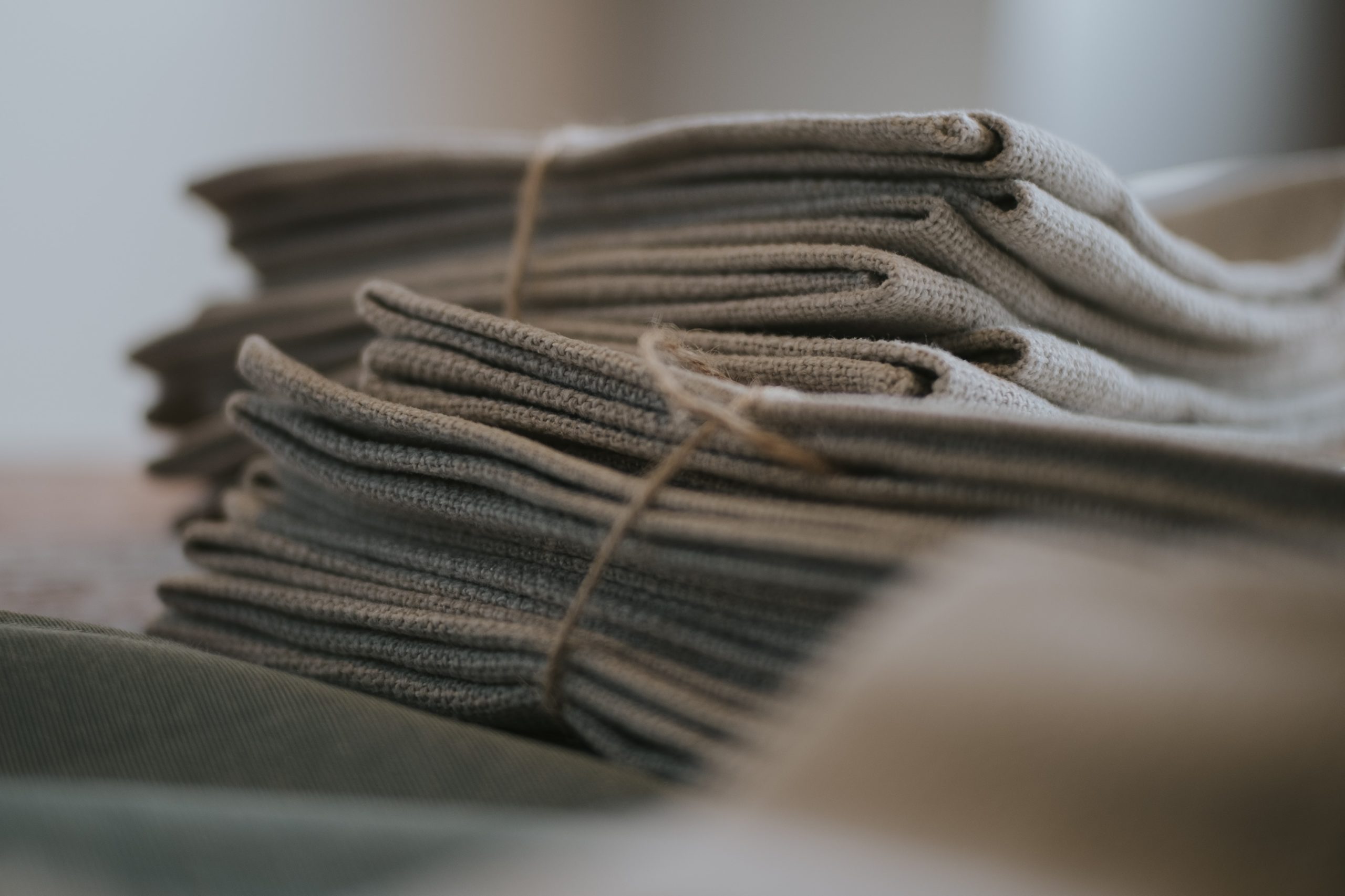
Cotton, linen, rayon, viscose, polyester, and blended fabrics all come with different prices. Even within the same fabric category, the quality, weight, composition, finish, and sourcing location can change the cost.
For example, a basic cotton T-shirt and a T-shirt made from heavier or specialty cotton may look similar at first, but the materials can have very different prices.
The same thing happens when you choose a fabric that the manufacturer needs to source specifically for your project.
Megaya provides fabric sourcing and works with fabrics sourced from Indonesia as well as other markets. If you already have a specific material in mind, you can also provide a reference or your own fabric.
This is why it helps to decide what you actually need from the fabric before requesting a quote. A manufacturer can price the project more accurately when you provide the composition, weight, color, texture, or a physical reference.
2. Garment Design and Construction
The design itself also affects the manufacturing cost.
A basic T-shirt with a simple construction needs less work than a garment with multiple panels, lining, pleats, pockets, zippers, special seams, or other details.
For example, compare a simple oversized shirt with a jacket that has a collar, lining, buttons, cuffs, several pockets, and different panels. They are both clothing, but the second garment requires more materials, more steps, and more sewing time.
The same applies to fit and construction.
A garment with a very specific shape may require more development and more attention during sampling and production than a straightforward design.
When you send a manufacturer a quotation request, your tech pack or specification sheet can make a big difference. Megaya’s Product Consultation service works with specification sheets and tech packs so the team can understand the design before production.
The clearer the design information, the easier it becomes to build a quote around the actual garment rather than making assumptions.
3. Quantity
The number of garments you order can affect the cost per piece.
For example, producing 30 pieces doesn’t require thirty times less work than producing 300 pieces. You still need to develop the garment, prepare the materials, set up production, and complete the same basic manufacturing steps. With a smaller order, those costs get divided across fewer pieces, so the price per garment can be higher.
That doesn’t mean you need to place a large order from the beginning. Megaya offers no-MOQ production, so you can start with a smaller quantity when you are testing a new design, launching a new brand, or simply do not want to hold a large amount of stock.
If you are planning to start with a small batch, our guide on low-MOQ clothing manufacturing explains more about how smaller production runs work and what to consider before placing an order.
4. Customization
Customization can add to the cost because it usually adds more work or materials to the garment.
That could mean a custom fit, a special fabric, unusual construction, custom dyeing, decorative details, or a combination of several requirements.
Think about a plain shirt compared with a shirt that has custom buttons, embroidered branding, a special wash, unique trims, and a custom pattern. The second garment requires more than simply sewing fabric together.
This is also why two brands cannot always compare their quotes by looking only at the product category.
One brand may ask for a basic dress, while another wants the same type of dress with custom details throughout the garment.
The more specific the product becomes, the more important it is to explain those details before asking for a final quote.
5. Printing and Embroidery
Adding branding can change the manufacturing cost as well.
Printing and embroidery involve additional production steps, and the price can depend on the size, placement, number of colors, design complexity, and method you choose.
A small embroidered chest logo is not the same job as a large multi-color graphic across the front and back of a garment.
The same applies to embroidery. A simple logo with a few stitches can require a different amount of work from a detailed design with lots of stitching.
Megaya can organize dyeing, printing, and embroidery as part of the production process.
When asking for a quote, include the artwork and explain where you want it placed. A manufacturer can give you a much clearer estimate when they know the actual size and requirements rather than simply hearing “I want my logo embroidered.”
6. Labels and Packaging
The garment itself isn’t always the end of the production process.
You may also need woven labels, printed labels, hangtags, care labels, branded packaging, folding, or other finishing details before the products are ready to sell.
For example, a brand may order the same T-shirt from two manufacturers but have different final costs because one includes only the garment while the other project includes custom neck labels, hangtags, individual packaging, and additional finishing.
Megaya also provides labeling, packing, and embellishment services for brands that need these steps as part of their production.
When you compare quotes, check whether these items are included. Otherwise, a lower garment price may not actually mean a lower total cost once you add everything else yourself.
7. Sampling
Sampling is another part of the cost that people sometimes forget when planning a clothing production budget.
Before producing the full order, you may need one or more samples to check the fit, measurements, fabric, construction, color, and finishing.
You may also need changes after seeing the first sample. Maybe the sleeve feels too wide, the length needs adjusting, or the fabric does not fall the way you expected.
Those development steps can add to the overall project cost, but they can also prevent more expensive mistakes later.
It is better to find a problem while you are still developing 20 pieces than after you have produced hundreds of garments.
When requesting a quote, ask what the sampling process includes and whether revisions or additional samples will affect the final cost.
8. Shipping
The price of manufacturing the garments is not necessarily the same as the amount you will spend to get them to you.
Shipping can add another cost, particularly when you are sending garments internationally.
The final amount can depend on the destination, shipment size, shipping method, and whether you need additional services such as express delivery.
This is why it helps to separate the manufacturing cost from the total cost of getting the finished products to your warehouse, studio, or customers.
A quote that looks cheaper at the manufacturing stage may not remain cheaper after shipping and other additional costs.
Why Don’t Manufacturers Give One Fixed Price?
You may notice that clothing manufacturers rarely list one fixed price for every garment. That is because there is no single price for “a T-shirt” or “a dress.”
Think about a basic T-shirt. You could make it from lightweight cotton, heavyweight cotton, or a different fabric altogether. You could order 20 pieces or 500. You could keep the design simple or add embroidery, printing, custom labels, and special packaging. Each of those choices changes the amount of material and work involved.
That is why a manufacturer needs more information before giving you a proper quotation.
Instead of asking only, “How much does it cost to make 100 T-shirts?”, give them the details of what you actually want to produce. For example, you can include the fabric, design, quantity, sizes, colors, printing or embroidery, labels, packaging, and shipping destination.
Once the manufacturer has those details, they can work out the cost of the actual garment rather than giving you a rough number based on assumptions.
It also makes price comparisons much easier. If two manufacturers quote for the same fabric, quantity, construction, branding, and packaging, you can compare the prices more fairly. Without those details, a cheaper quote may simply leave out costs that another manufacturer has already included.
How to Request a Clothing Manufacturing Quote
When you contact a clothing manufacturer, you do not need to have every production detail finalized. You just need to give them enough information to understand what you are trying to make.
For example, instead of writing: “I want to make 100 T-shirts. How much?”
You could explain that you want 100 oversized T-shirts, made from a medium-weight cotton fabric, in two colors, with an embroidered logo on the chest.
That gives the manufacturer a much clearer picture of the product you want.
Try to include the basic details you already know:
- The type of garment
- Estimated quantity
- Fabric or material preference
- Sizes
- Colors
- Design or reference images
- Printing or embroidery
- Labels or other branding
- Packaging requirements
- Delivery location
A tech pack can make the process even easier because it puts details such as measurements, construction, fabric, and trims in one place. But you can still start a conversation without one if you are still developing the product.
The same applies to fabric. Instead of simply saying you want “cotton,” explain what you are looking for. You might want a lightweight cotton for a summer shirt, a heavier cotton for structured clothing, or a specific color or texture.
If you know the kind of fabric you want but haven’t found it yet, Megaya’s Fabric Sourcing service can help you look for a suitable material.
The clearer your starting information is, the easier it becomes for the manufacturer to tell you what the project will involve and how much it may cost.
What Should You Ask When Comparing Quotes?
When you receive a quotation, don’t compare the final numbers alone.
First, check what each manufacturer has actually included.
Imagine Manufacturer A quotes $15 per T-shirt, while Manufacturer B quotes $18. At first, A looks cheaper. But then you find out that A has not included the custom label, embroidery, packaging, or shipping, while B has already included some of those costs.
The $15 price may not actually be the cheaper option.
When you compare quotes, check whether they cover the same things:
- Fabric
- Sewing and garment production
- Printing or embroidery
- Labels
- Packaging
- Sampling
- Shipping
- Other finishing or customization
You should also check whether the price is per piece and whether the manufacturer has listed any additional costs separately.
This gives you a better idea of the actual cost of producing the garment, rather than comparing two numbers that were calculated in completely different ways.
Is Clothing Manufacturing in Bali Expensive?
There is no single answer because the cost depends on what you want to produce.
A simple cotton T-shirt made in one color will naturally cost less than a jacket with multiple panels, lining, custom hardware, embroidery, and special packaging.
The quantity matters too. Producing 30 pieces can result in a higher cost per piece than producing 300 because certain production and preparation costs have fewer garments to cover.
Fabric can change the price, as can custom dyeing, printing, embroidery, labels, packaging, and other additions.
So when someone asks, “How much does it cost to manufacture clothing in Bali?”, there is no useful number without knowing what they want to make.
A better way to approach the question is to start with the actual product:
- What are you making?
- What fabric do you want?
- How many pieces do you need?
- What sizes and colors do you need?
- Do you want printing, embroidery, or other customization?
- Do you need labels and packaging?
Once those details are clear, a manufacturer can give you a much more useful quotation.
That is also why two Bali clothing manufacturers can give you different prices for what sounds like the same garment. They may be working from different fabrics, construction details, quantities, or services.
The price is not really about “making a T-shirt in Bali.” It is about making your specific T-shirt, with your specific materials, quantity, and requirements.
FAQ
There is no single price because the cost depends on the fabric, garment construction, quantity, customization, finishing, sampling, packaging, and shipping.
Not necessarily. Smaller orders can have a higher cost per piece because production and development costs are spread across fewer garments. However, a no-MOQ manufacturer can let a small brand start with a smaller quantity and test the product before placing a larger order.
Yes. The fabric type, quality, weight, composition, color, sourcing, and availability can all affect the final cost.
Megaya offers no-MOQ clothing production, so you can start with a smaller quantity instead of committing to a large production run from the beginning. This can be useful when you are testing a new product or starting with a small collection.
Yes. Megaya offers Fabric Sourcing if you already know what kind of material you want but have not found the right fabric yet. You can share details such as composition, color, texture, weight, or a reference sample.
Final Thoughts
There is no single “Bali clothing manufacturing cost” because every garment starts with different requirements.
The fabric, design, quantity, customization, branding, sampling, packaging, and shipping can all change the final number. A simple garment in a standard fabric will naturally have a different production cost from a highly customized piece with special materials and finishing.
So when you request a quotation, give the manufacturer as much information as you can. A clear design, realistic quantity, fabric requirements, and details about labels, printing, embroidery, packaging, and shipping will give you a much better starting point.
And if you are still figuring out your materials, quantities, or production setup, Megaya also offers garment production services covering areas such as product consultation, fabric sourcing, finishing, labeling, quality assurance, and shipping.
Get in touch with Megaya to request a quotation for your clothing project.