Starting an activewear brand can seem pretty straightforward.
You have an idea for the clothes, you know the kind of style you want, and now you just need to make the products.
But once you start looking into fabrics, measurements, samples, and production, there are quite a few things to figure out.
Activewear needs to do more than look good. The fabric needs to work with the design, the fit needs to feel right, and the finished garment needs to be suitable for movement.
So where do you actually start?
In this guide, we’ll walk through the main steps involved in creating an activewear brand, from choosing your products and fabric to developing samples and moving into production.
What You Need to Get Started
Before you contact a manufacturer, you don’t need a finished collection or a perfect production plan.
If you’re planning to work with a Bali activewear manufacturer, having a basic idea of your products and requirements will also make the first conversation much easier.
For example, you should have a basic idea of what kind of activewear you want to make. Maybe you’re thinking about leggings and sports bras. Maybe you want to create running clothes, yoga wear, or simple activewear sets for everyday use.
It also helps to know a little about how you want the products to look and feel. Think about the fit, the fabric, the colors, and the overall style you’re going for.
You can start with something as simple as:
- The type of activewear you want to make
- A few design references or sketches
- The fabric you have in mind, if you already know
- The number of styles you want to develop
- An estimate of how many pieces you may want to produce
You don’t need to have every detail decided yet.
The idea is to give yourself and the manufacturer enough information to understand what you’re trying to make and what needs to happen next.
1. Decide What Kind of Activewear You Want to Make
Before you start talking about production, decide what you’re actually making.
You might want to create leggings, sports bras, activewear tops, shorts, bodysuits, or matching sets.
You don’t necessarily need a large collection at the beginning.
A smaller collection can make it easier to focus on the products, work through the sampling process, and see how everything comes together before expanding.
Think about how each product is meant to be worn too.
A pair of leggings made for training may need different fabric and construction choices from a lightweight top designed for everyday movement.
The product’s purpose will affect many of the decisions you make later.
If you’re looking for a Bali activewear manufacturer, Megaya offers different types of activewear, including leggings, sports bras, and other activewear pieces. Explore our activewear collection to see what can be developed for your brand.
2. Think About What the Clothes Are For
Before you start designing your activewear, think about how people are going to use it.
A pair of leggings made for yoga may need a different fit and feel from a pair made for running. A training top may need different fabric and construction from a tank top meant for light workouts or everyday wear.
So start with a simple question: What will people actually do in these clothes?
For example, you might want to make:
- Leggings for yoga and studio workouts
- Running tops and shorts
- Sports bras for gym training
- Matching sets for light workouts and everyday wear
You don’t need to choose only one type of activity for your whole brand. But you should know what each product is supposed to be used for.
That will help you make better decisions about the fit, fabric, stretch, coverage, and overall design.
For example, a running product may need to feel lightweight and allow plenty of movement. A yoga product may need a comfortable fit that works through different positions. A lifestyle activewear set may put more focus on comfort and appearance.
Start with the use of the product. Then build the design around it.
3. Choose the Right Fabric
Once you know what you want to make, think about what the fabric needs to do.
For example, leggings usually need good stretch so they can move with the body. A running top may need a lighter fabric that feels comfortable during movement.
So instead of asking, “What is the best activewear fabric?”
You can ask: “What does this product need from the fabric?”
You can explore the fabrics Megaya works with and choose an option that fits the product you’re developing.
4. Turn Your Idea Into a Clear Design
Once you know what you want to make, you need to show the manufacturer what the garment should look like.
You don’t need a perfect design file to start. A sketch, reference photo, or existing garment can be enough to explain the idea.
But the more details you can provide, the easier it is to make the right sample.
For example, if you’re making a pair of leggings, it helps to show:
- The length you want
- Where the waistband should sit
- The fabric you’re considering
- Any pockets, panels, or other details
- Your logo or label placement
You don’t need to know how to make the garment yourself. You just need to make it clear what you want the finished product to look like.
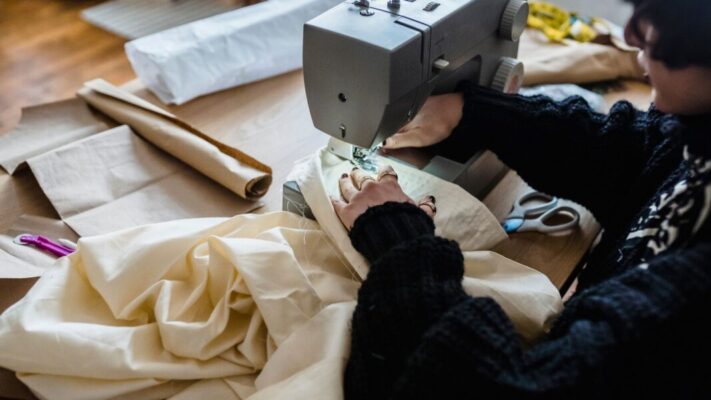
5. Make Your First Sample
Once your design is clear, the next step is to make one actual piece of the garment.
This is your first sample.
For example, if you want to sell a pair of leggings, the sample is one pair made from the fabric and design you chose.
Now you can try it on and see if the product is actually what you had in mind.
You can check things like:
- Does it fit the way you want?
- Is the length right?
- Does the fabric feel right?
- Does it move comfortably?
- Are the design details in the right place?
You may find that some things need to change and that’s normal.
The first sample is there to show you what works and what needs to be adjusted before you make the full order.
You can learn more about Megaya‘s sampling process to see how this stage fits into the manufacturing process.
You can learn more about Megaya‘s sampling process to see how this stage fits into the manufacturing process. As a Bali activewear manufacturer, Megaya works with brands through product development, sampling, amendments, and production.
6. Check the Fit
Now that you have the sample, try it on.
This is where you can see whether the garment actually fits the way you wanted.
For example, with a pair of leggings, you can sit, stretch, walk, or squat and see how the garment feels.
You can check things like:
- Is it too tight or too loose?
- Is the length right?
- Does it stay in place?
- Does the fabric stretch comfortably?
- Does anything feel uncomfortable?
You may find that the sample is already close to what you want. You may only need to change the waistband, length, or another small detail.
Make those changes and check the sample again before moving on to production.
7. Make Changes Before Production
After you try on the sample, you may notice that a few things still need to be changed. Maybe the waistband feels too tight, the body is too short, or the straps don’t sit where you want them to. This is normal because some issues are difficult to notice until you can actually wear the garment.
Write down the changes you want and explain them clearly to the manufacturer. Instead of saying, “The fit doesn’t feel right,” tell them what needs to change, such as “The waistband feels too tight” or “Make the body 2 cm longer.” Clear feedback makes it easier for the manufacturer to understand what you want in the next sample.
Once the changes are made, check the updated sample again. Make sure the changes have fixed the problem and that the rest of the garment still looks and feels right. When you’re happy with the result, you can move forward and approve the garment for production.
8. Review the Updated Sample
Once you’ve received the updated sample, check the changes again.
Did the waistband feel better? Is the length right now? Does the garment still fit comfortably when you move? This is also a chance to make sure that fixing one part of the garment didn’t create a new problem somewhere else.
You may not need to make another round of changes. But if something still isn’t right, it’s better to fix it now than after the full order has been made.
There isn’t a set number of samples that every activewear brand needs. Some products may be ready after one or two rounds, while others may need more changes. What matters is that you’re happy with the version you’re approving for production.
9. Decide How Much You Want to Produce
Once the product is ready, you need to decide how many pieces you want to make.
If this is your first collection, you may want to start with a smaller quantity. This can give you a chance to test the products without immediately producing a large order.
You can also think about how many styles you’re making. Producing 100 pieces of one style is a different plan from producing a smaller quantity across several different styles.
The right quantity depends on your budget, collection, expected demand, and production plan. Megaya‘s Activewear includes both small-batch and bulk production, so the quantity can be planned around the needs of the collection.
10. Approve the Final Version
Before production starts, take one last look at the version you’re approving.
Make sure the measurements, fabric, colors, fit, construction, branding, and other product details match what you want. You should also make sure the manufacturer is working from the same approved version.
This may sound obvious, but it’s an easy thing to overlook when there are multiple files, samples, and changes involved.
Once everything matches and you’re happy with the result, you can approve the garment for production.
11. Move Into Production
After the final sample is approved, the garment can move into production.
At this point, you’re no longer figuring out what the product should look like. You’re making the approved version in the quantity you’ve decided on.
The exact production process can vary depending on the garment. A simple top may require fewer production steps than a more detailed activewear piece with several panels, trims, or construction details.
Megaya‘s manufacturing process covers the stages involved in taking a garment from development through production, including pattern development, sampling, amendments, cutting, sewing, and quality assurance.
That’s why the work you do before production matters. The clearer the approved product is, the less room there is for confusion once production starts.
12. Check the Finished Garments
Once production is complete, the garments still need to be checked.
You want to make sure the finished products match the approved sample and that any obvious problems are caught before the order is sent out.
This can include checking the fabric, color, style, size, stains, and other visible defects. Megaya‘s quality assurance process covers these types of checks on finished garments.
Sampling and quality control do two different jobs.
The sample lets you decide whether the product is right before making the full order. Quality control, on the other hand, helps make sure the finished garments follow the approved version.
Starting With a Smaller Collection
Your first collection doesn’t have to cover every type of activewear. A few well-developed products can be enough to introduce the brand and give you something clear to work with.
You could start with a small group, such as leggings, a sports bra, and a matching top. Working with fewer styles also means you have fewer products to sample, fit, adjust, and prepare for production.
As the brand grows, you can add new products based on what fits the collection and what your customers are looking for.
Understanding the Manufacturing Process
You don’t have to know how to make the garments yourself before starting an activewear brand. What helps is knowing what you want the finished products to look like and being able to explain those details clearly.
If you’re looking for a Bali activewear manufacturer, it’s also useful to understand what happens after you share your idea. The manufacturer can help turn your design into a finished garment through steps such as pattern development, sampling, amendments, cutting, sewing, and quality assurance.
Your role is to make decisions about the product and review the samples as they are developed. The manufacturer handles the technical work needed to turn those ideas into finished garments.
Having a basic understanding of the process also makes it easier to communicate, spot problems, and decide when a product is ready to move forward.
Megaya‘s manufacturing process covers the main stages involved in developing and producing garments in Bali.
Getting Ready to Work With a Manufacturer
A finished collection isn’t the only way to approach a manufacturer. You can start the conversation while the products are still being developed.
If you’re looking for an activewear manufacturer in Bali, it helps to have your designs or references ready, along with the type of activewear you want to make, your size range, and an estimated quantity.
You can also share anything specific to the product, such as fabric preferences, logo placement, labels, or special design details.
These details give the manufacturer a starting point and make it easier to discuss the next steps, even when some parts of the product are still being worked out.
Understanding the Cost of Activewear Production
The cost of an activewear collection can vary quite a bit from one product to another. Fabric, design complexity, sampling, production quantity, branding, and other product requirements all play a part.
For example, a simple tank top may be relatively straightforward to develop, while leggings with multiple panels or specific fabric requirements may involve more work.
Rather than looking for one fixed price, it makes more sense to consider what each product needs and how those choices affect the overall production cost.
Giving Your Collection Enough Time
There is more to developing an activewear collection than making the first sample.
You may need time to review the garment, adjust the fit, test a different fabric, or make other changes before the final version is approved. The number of styles and the complexity of the designs can also affect how much development is involved.
Because of this, it’s better to leave room for revisions instead of planning everything around the fastest possible turnaround. The goal is to have a product you’re confident about before production begins.
Starting With Small-Batch Production
Producing a smaller quantity can be a practical way to start a new activewear collection. Instead of committing to a large order immediately, you can make a limited run and use it to introduce the products to your customers.
This also gives you a chance to learn from the first collection. You may find that certain styles perform better than others, or that there are products you’d like to change before making the next order.
Megaya‘s Activewear Edition includes both small-batch production and bulk production, giving brands different production options depending on their collection and requirements.
FAQ
Start with a clear idea of what you want to make. You can bring your design, reference images, preferred fabric, size range, and an estimated quantity. You don’t need to have every production detail ready before contacting with Megaya.
Yes. You can come to Megaya with your own design or just an idea of what you want to make. As an activewear manufacturer in Bali, Megaya can discuss the product with you and help develop it through sampling and the production process.
Yes. You can choose from the fabrics Megaya works with or discuss other fabric options based on the product you’re making. The right fabric will depend on the type of activewear and how you want it to feel and perform.
A sample lets you see the actual garment before making the full order. You can try it on, check the fit and fabric, and make changes if something isn’t right. Once you’re happy with the sample, it can move into production.
Megaya offers both small-batch and bulk production for activewear in Bali. The quantity you need will depend on your collection, budget, and production plans, so you can discuss the right option with the team.
Final Thoughts
Building an activewear brand takes more than having a good design. You need to choose the right products, find suitable fabrics, develop samples, check the fit, and make the necessary changes before production.
If you’re looking for a Bali activewear manufacturer, it helps to work with a manufacturer that can support you through these stages rather than only handling the final production.
You don’t have to figure out every part of the process on your own. Megaya can help you take your activewear idea from the first discussion and sample development through to production, whether you’re starting with a small collection or planning a larger order.Building an activewear brand takes more than having a good design. You need to choose the right products, find suitable fabrics, develop samples, check the fit, and make the necessary changes before production.
Ready to start your activewear collection? Contact Megaya to discuss your products and see what the next step looks like.